
Google Ads App campaigns can now report store visits, according to two new Google Ads Help pages that The PPC Times detected on November 20, 2026. The pages, About store visits reporting for App campaigns and Measure store visits for your App Campaigns, say the feature measures how many users visit a physical store after interacting with an App campaign ad, and that the visits are reported in the Google Ads interface. The pages do not give a launch date or say whether the rollout covers every account.
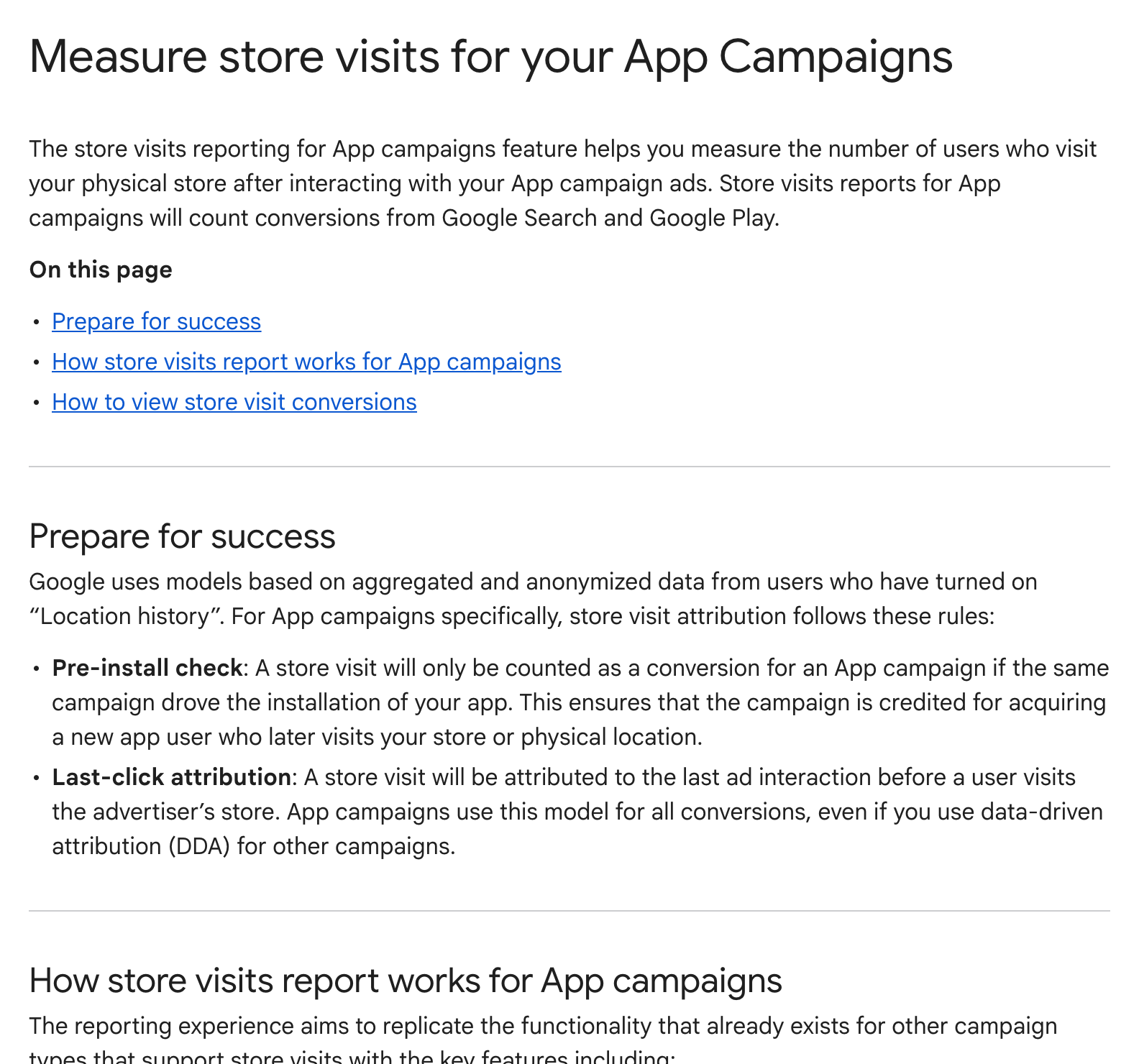
How does store visits reporting work for Google Ads App campaigns?
Store visits reporting for App campaigns uses Google's existing store visit models, which the Measure page says are based on aggregated and anonymized data from users who have turned on Location history. Two attribution rules are specific to App campaigns:
- Pre-install check: a store visit counts as a conversion for an App campaign only if the same campaign drove the install of the app.
- Last-click attribution: the visit is credited to the last ad interaction before the store visit. The About page says App campaigns use last-click even when the account is set to data-driven attribution.
Other details from the two pages:
- Inventory: the Measure page says store visit reports for App campaigns count conversions from Google Search and Google Play. The About page says the initial launch excludes YouTube, Display and the Discover Feed.
- Columns: store visits are added to the All conversions column automatically. They do not go into the Conversions column used for bid optimization. The Measure page says they will populate that column only after bidding for store visits is enabled and configured; neither page says how to do that.
- Reporting lag: store visit data can take up to 5 days to appear.
- Report levels: data is available at campaign, ad group and asset level, according to the Measure page.
To see the individual metrics, the Measure page says to open Modify columns, choose Conversions under Select metrics and add the store visit columns, which include Store visits, Store visit rate and Store visit value, plus a cost metric.
Eligibility
According to the About page, an account needs:
- Store locations linked through location assets (a linked Google Business Profile with at least 90% of locations verified) or affiliate location assets.
- Enough clicks, impressions and store visit data for Google's models. Google says these thresholds are not publicly disclosed.
- A business in a country where store visit reporting is available.
- Locations outside sensitive categories such as healthcare or religion.
If an account meets these requirements, the About page says a Store visits conversion action is added automatically.
Why it matters for advertisers
Retailers with both an app and physical stores could now see part of the offline effect of app install spend in the same account. That may help when App campaigns are judged against omnichannel targets such as omnichannel ROAS, which Google names on both pages.
The rules are narrower than for other campaign types. Because only visits from users the same campaign brought to install the app are counted, and only from Google Search and Google Play inventory, the numbers are likely to be smaller than store visit figures advertisers see for Search or Performance Max. Last-click attribution also means App campaign store visits may not compare directly with campaigns measured on data-driven attribution.
Since the visits sit only in All conversions for now, they should not change how existing App campaign bidding behaves.
What to do now
- Check whether a Store visits conversion action has appeared in accounts that run App campaigns and already have linked locations.
- If you use location assets, check that at least 90% of your Business Profile locations are verified.
- Add the store visit columns to App campaign reports and wait at least 5 days before reading recent dates.
- When comparing store visits across campaign types, note the attribution model and the excluded YouTube, Display and Discover inventory.
- Treat any mention of bidding on store visits as unconfirmed until Google documents how to turn it on.